|

|


|
 
|
Bottled Water - The Differences | ||
|
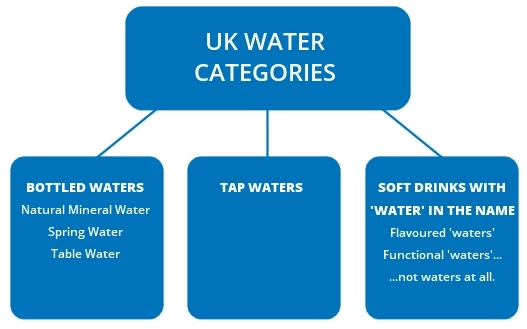
All waters sold for drinking in the UK are safe to consume. However, in order to make an informed choice about what it is you are drinking, it is useful to understand the differences between the various categories of water. These differences between waters become ever more complicated. So to make things simple heres a quick guide to whats what. There are six types of liquid that may be labelled water. However two of these are, in fact, soft drinks. The Law Governing Bottled WatersBottled Waters must comply with the European Parliament Directives 80/777/EEC & 96/70/EC, & Natural Mineral Water, Spring Water & Bottled Drinking Water Regulations 1999 and subsequent amendments. These laws detail specific & stringent regulations that enable consumers to be aware of exactly what product they're buying. Bottled waters are regulated by the Food Standards Agency. Soft DrinksSome soft drinks are liable to be confused with water because they sometimes use the word in the name. However, as soon as you add minerals, carbohydrate, vitamins, flavourings or sweeteners to water, it becomes a soft drink. The two most common categories are Flavoured waters and so-called Functional waters. Many meet specific health or sports needs or just taste appealing but these drinks often contain sugar and may be higher in calories than their appearance suggests. They are perfectly fine as an occasional treat but should not be confused with water. Tap WaterBefore it reaches our taps, the water companies treat mains water to neutralise it and add disinfecting agents such as chlorine. Domestic filtration removes some of the chlorine and temporary hardness so that taste may improve. The trend towards healthy eating and drinking means that more and more people are buying bottled water. We're mostly made of water. Water is life-giving and vital. |
There are three types of bottled water: Natural Mineral Water, Spring Water and Table waters (referred to in law as Other bottled water). These are all governed by special regulations. These waters are stringently regulated by the DEFRA. Natural Mineral WaterNatural Mineral Water must come from an identified and protected source. It is guaranteed to be consistent in composition and naturally wholesome without any treatment - except in some cases the addition of carbon dioxide to make the water sparkle. Natural Mineral Water status is only granted to waters that are demonstrated to be free from pollution and have a characteristic stable composition. Spring WaterIn the UK, like Natural Mineral Water, Spring Water must originate from an underground source, be bottled at source and be microbiologically safe without treatment. However, in the UK, unlike Natural Mineral Waters, certain other treatments are permitted for Spring Waters. Treatments may include the removal of certain minerals as defined by the European Union Scientific Committee for Food, which has yet to issue its guidelines. These allow the removal of certain undesirable substances. The rules regarding Spring Water in the UK are currently being reviewed by DEFRA. Table WaterTable water (so called by the industry but referred to the in the Regulations as other bottled waters) is usually bottled filtered water which is sourced as tap water. |
|
| ||||||||||||||||

|
||||||||||||||||